 EN
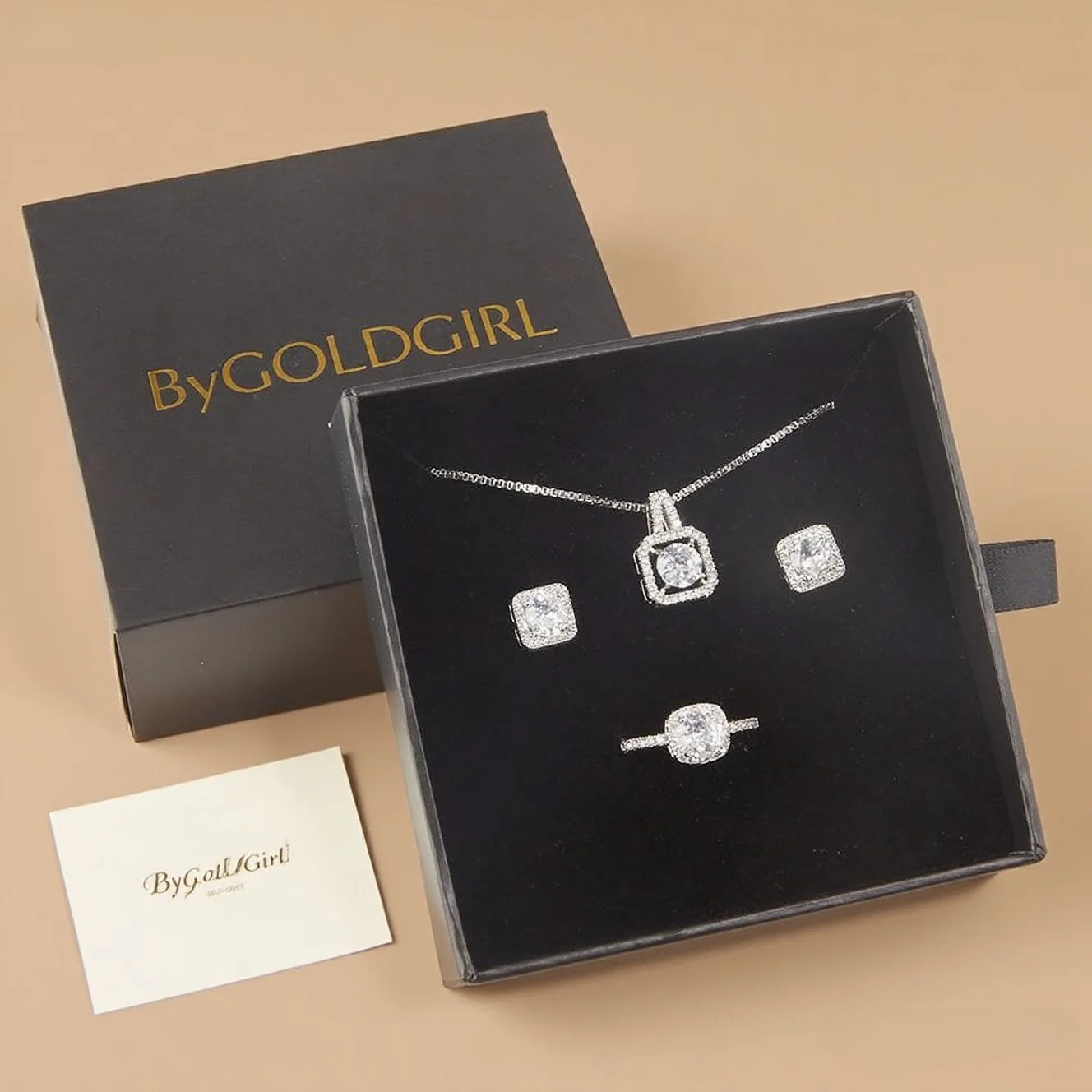
Luxury is a promise of quality, and increasingly that promise extends to how a product is made and what it leaves behind. For high-end brands selling into international markets, the paper inside the box now carries almost as much weight as the product itself. FSC-certified materials have moved from a niche sustainability talking point to a practical procurement requirement that retail buyers, distributors, and regulators increasingly expect.
Partnering with a manufacturer who understands sustainable material sourcing is no longer optional for brands with global ambitions. For anyone selling internationally, FSC-certified paper has become part of doing business at the high end.
What "FSC-Certified" Really Means
The Forest Stewardship Council (FSC) is an independent, non-profit organisation that sets standards for responsibly managed forests. Its certification system tracks wood fibre from forest to finished product through a chain-of-custody model. Three labels appear most often in buyer conversations:
- FSC 100% — all fibre comes from FSC-certified forests.
- FSC Recycled — all fibre comes from verified recycled sources.
- FSC Mix — a blend of certified, recycled, or controlled wood.
For packaging, the practical meaning is traceability. An FSC-certified box lets a brand demonstrate that its paper did not originate from irresponsible harvesting, and that traceability is documented through the supply chain — exactly what auditors, retail compliance teams, and sustainability-conscious consumers want to see.
Why High-End Brands Can No Longer Ignore FSC-Certified Sourcing
Premium brands are judged on consistency. A luxury product presented in packaging that contradicts the brand's environmental values creates a jarring mismatch. Three pressures make certified paper essential rather than optional.
Retail buyer requirements. Large retailers and marketplaces increasingly build sustainability criteria into supplier onboarding. A brand that cannot document its FSC-certified sourcing risks losing shelf space.
Regulatory momentum. Governments in several major markets are tightening rules on deforestation-linked materials and packaging waste. Responsible sourcing is becoming a compliance issue, not only a marketing one.
Consumer expectation. Buyers of premium goods research the brands they trust. Recyclable, responsibly sourced paper is now treated as a baseline expectation rather than a bonus.
The conclusion is straightforward: for a brand selling across borders, certified fibre is a commercial necessity, and it is the standard applied when sourcing material for every client program.
Material Science: FSC-Certified Paper Without Compromising Luxury
The old objection to sustainable paper was that it looked or felt inferior. That objection no longer survives contact with modern FSC-certified stock. Certified grades are available across the same weights and surfaces that luxury packaging demands, and the finish determines perceived quality far more than the fibre's certification does.
Consider the main substrates:
- Rigid grey board forms the structure of premium gift boxes and can be sourced as FSC Mix or FSC Recycled while still holding crisp corners.
- Coated and uncoated art paper wraps the board. FSC-certified wraps accept foil stamping, embossing, spot UV, and soft-touch lamination without any visual penalty.
- Kraft paper delivers a natural, tactile aesthetic that suits artisan and organic brands, and kraft is one of the easiest grades to source responsibly.
- Recycled board supports circular-economy positioning, especially for secondary packaging and inserts.
Material choice drives three performance variables: stiffness, printability, and moisture resistance. A capable manufacturer selects the FSC-certified grade that satisfies all three for a given product, evaluating the trade-offs during prototyping with eco-materials and 3D samples so clients can feel the result rather than imagine it.
The Sustainability Story Built Into the Box
Certification is the headline, but it works best as one part of a broader sustainable packaging strategy. High-end brands can combine several elements:
- Certified fibre for traceable sourcing.
- Recyclable construction that avoids hard-to-separate mixed materials.
- Right-sized packaging that reduces material use and shipping volume.
- Responsible finishing such as water-based coatings and recyclable inks.
- Foldable structures that reduce freight emissions per unit.
FSC-certified fibre is the foundation, but the construction around it matters just as much. Building recyclable and eco-material options into prototyping means sustainability is designed in from the start rather than retrofitted at the end, which keeps the environmental claim honest and the unboxing experience premium.
Documentation, Compliance, and Global Delivery
For international brands, sustainability claims must be backed by evidence. Buyers should expect to receive material specifications and sourcing information alongside the physical product, and an FSC-certified order should travel with that paperwork rather than arriving as a verbal assurance.
Speed matters too. A sustainability-driven redesign should never derail a launch calendar. Sampling is completed within 3 working days, and production follows a clear volume-based schedule: 12 working days for 1K–10K pcs, 12–15 working days for 10K–50K pcs, and 15–20 working days for larger runs. Certified programs therefore stay compatible with real retail deadlines, with delivery to more than 120 countries at a 99.7% on-time rate.
Where FSC-Certified Materials Fit the Product Range
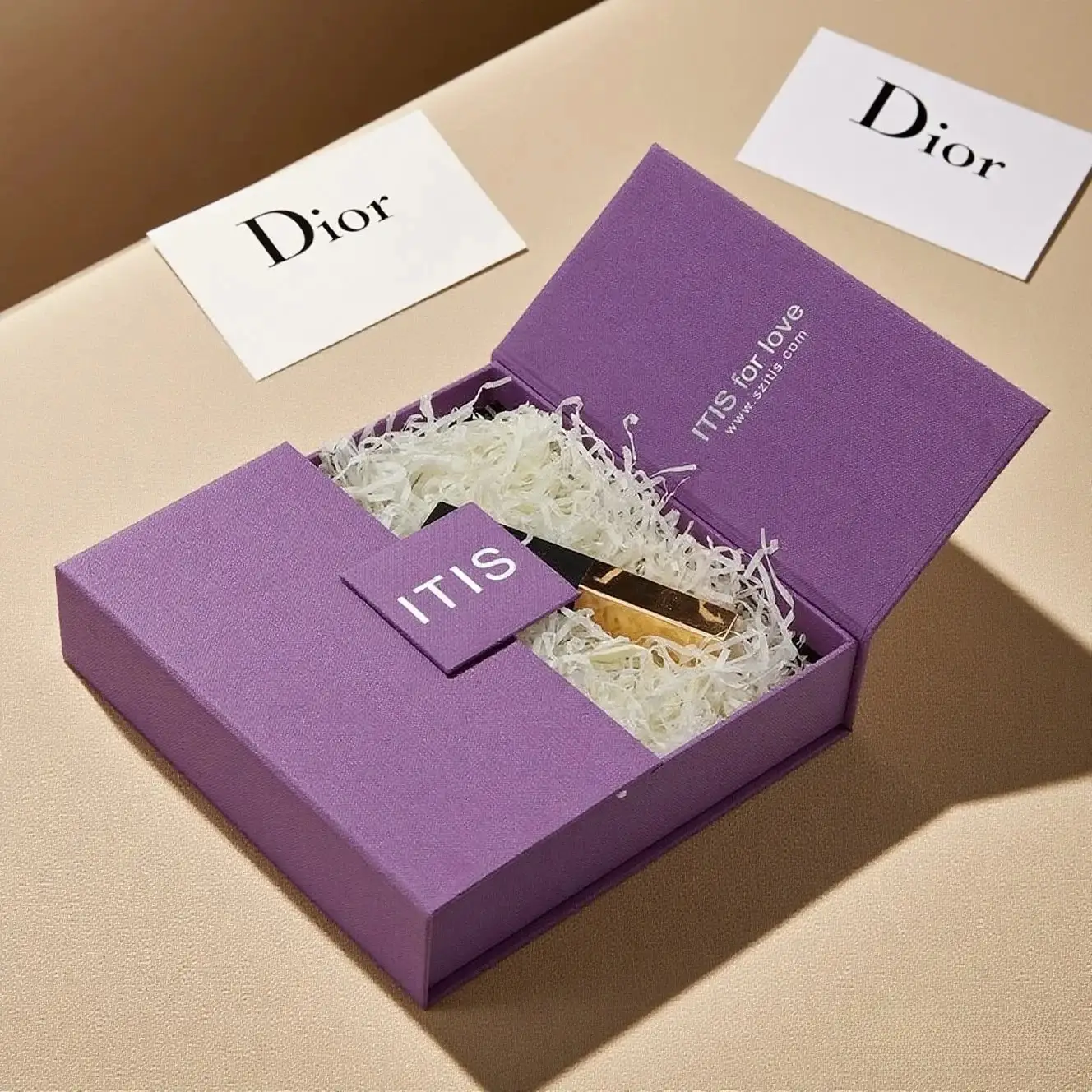
Different products call for different sustainable constructions. A seasonal gifting program might use certified rigid board for a Holiday Gift Box. A jewellery or watch brand might choose a certified Luxury Packaging Box with a recyclable insert. A retailer bundling the full experience adds Paper Bags & Accessories made from responsibly sourced paper so the entire presentation tells one consistent story.
That coherence — matching bag, box, and insert to a single FSC-certified standard — is what separates a genuine sustainability program from a scatter of green claims.
Specifying FSC-Certified Packaging: A Buyer's Checklist
Turning sustainability intent into a real order requires precision. A useful checklist for brand owners:
- State the certification target up front. Tell the manufacturer which label you need — FSC 100%, FSC Recycled, or FSC Mix — before artwork and structure are finalised, so nothing has to be redesigned later.
- Confirm the full material list. The box, the insert, the tissue, and the shopping bag can all be specified to a consistent standard, so the fibre footprint is complete rather than partial.
- Test the finish on the certified stock. Foiling, embossing, and lamination behave predictably on certified grades, but a physical sample is still the safest way to approve a look.
- Ask for specifications in writing. Material details should travel with the order so compliance teams can document them.
- Plan the delivery schedule. Certified stock is available at the same volumes as conventional paper, and lead times stay volume-based and predictable.
Handled this way, an FSC-certified program is no more complex than a conventional one — it simply starts from a better-informed brief.
The Business Case Beyond Ethics
Certified materials also make commercial sense. They reduce regulatory risk in markets tightening packaging rules, strengthen retail partnerships, and support premium pricing by aligning packaging with the values that justify a higher price point. In some cases they reduce cost as well, because recyclable mono-material structures are often simpler to produce than complex laminated assemblies.
For brands weighing the switch, the calculation usually looks like this: a modest change in material specification, no meaningful loss in perceived quality, and a measurable gain in credibility with buyers and regulators. Quantifying that trade-off during sampling ensures the decision is based on a physical product rather than a slide.
Common Misconceptions
"FSC-certified paper is lower quality." Modern certified grades are indistinguishable in appearance from conventional equivalents when finished to the same standard.
"Certification is only for large brands." Any brand can specify certified stock; it is a sourcing decision, not a scale threshold.
"It is only about the outer box." Inserts, tissue, bags, and shipping cartons all contribute to the overall fibre footprint and can be sourced to the same standard.
"It slows production." With a manufacturer that already works with eco-materials as standard, certified stock adds no meaningful delay.
Choosing a Partner Who Takes It Seriously
Sustainability commitments are only as strong as the supply chain behind them. The right partner combines certified material sourcing, in-house design and engineering, disciplined quality control, and reliable global logistics. ITIS Packaging has spent more than 20 years building exactly that combination: a one-stop service from concept to delivery, 200+ employees, 20+ production lines, 12 registered patents, and a stated commitment to sustainability and international standards.
For high-end international brands, that means certified materials can be specified confidently, produced at scale, and delivered on schedule — without sacrificing the finish, structure, or feel that define a luxury unboxing.
Frequently Asked Questions
Can a full package — box, bag, and insert — be produced from certified fibre? Yes. The Luxury Packaging Box, Holiday Gift Box, and Paper Bags & Accessories ranges can all be specified with responsibly sourced paper so the fibre story stays consistent across the whole unboxing.
Will certified paper change my lead time? Not meaningfully. Lead times are quoted by order volume, from 12 working days for 1K–10K pcs up to 15–20 working days for the largest runs.
How do I request certified materials? Raise it in the brief. The material choice is built into the quote and prototype, then confirmed on the physical sample.
Is there a minimum order for sustainable packaging? As with all custom work, it depends on structure and material. Every project is quoted individually, so there is no hidden standard minimum.
The Bottom Line
FSC-certified materials are no longer a differentiator reserved for eco-brands; they are a baseline expectation for any high-end brand operating internationally. They protect reputation, satisfy retail and regulatory requirements, and — thanks to advances in paper technology — cost nothing in perceived quality. The brands that move early build trust with the buyers and consumers who increasingly read the label before they read the price. With ITIS Packaging, that transition is a design decision made in the prototype stage, not a compromise made on the factory floor.
Table of Contents
- What "FSC-Certified" Really Means
- Why High-End Brands Can No Longer Ignore FSC-Certified Sourcing
- Material Science: FSC-Certified Paper Without Compromising Luxury
- The Sustainability Story Built Into the Box
- Documentation, Compliance, and Global Delivery
- Where FSC-Certified Materials Fit the Product Range
- Specifying FSC-Certified Packaging: A Buyer's Checklist
- The Business Case Beyond Ethics
- Common Misconceptions
- Choosing a Partner Who Takes It Seriously
- Frequently Asked Questions
- The Bottom Line

