 EN
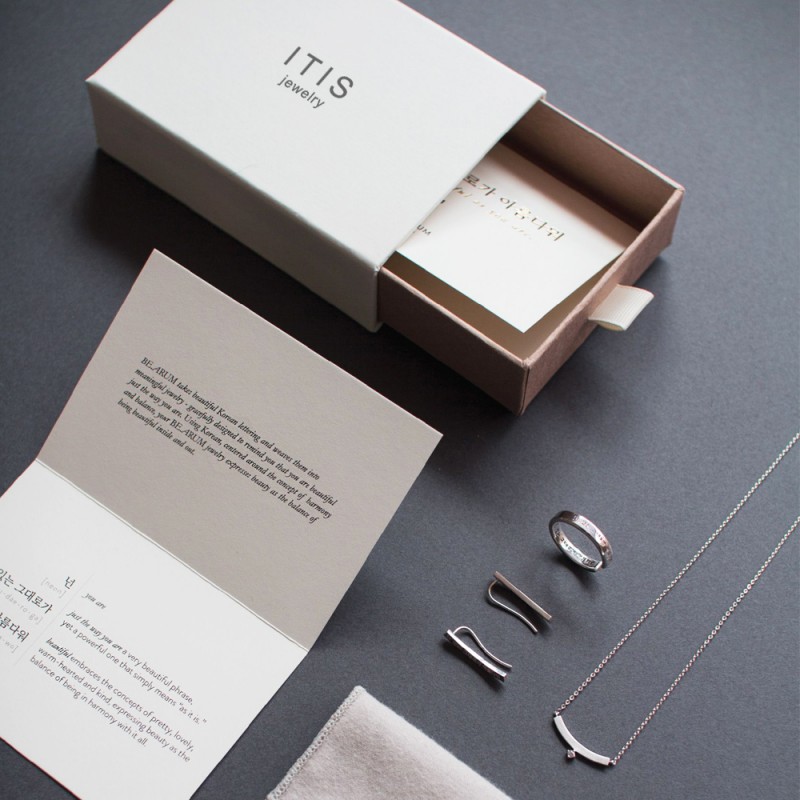
Luxury packaging has always been a study in contradiction: it exists to be admired, yet its purpose is often short-lived. A premium box is unboxed once, photographed, then either kept as a keepsake or discarded. Increasingly, high-end brands are asking a harder question — what happens to the printing on that box when its useful life ends? The answer has fuelled the rapid adoption of biodegradable ink systems, a printing technology that lets luxury packaging carry rich, saturated colour while remaining compatible with recycling and composting.
For a brand weighing the switch, biodegradable ink is not a compromise but an upgrade. It resolves a tension the premium sector spent decades assuming was unavoidable, and it does so without touching the unboxing experience that customers actually judge.
What Makes a Biodegradable Ink Different?
A biodegradable ink replaces a large share of the petroleum-based carrier oils found in conventional inks with soybean oil. The result is a bio-based formulation that degrades more readily, emits lower levels of volatile organic compounds (VOCs) during printing, and de-inks more effectively during paper recycling.
At a chemistry level, the difference matters in three ways:
- Renewable feedstock. Soybean oil is an agricultural product rather than a fossil-derived one.
- Lower VOC emissions. Reduced solvent content means cleaner press rooms and a smaller air-quality footprint.
- Better de-inkability. Paper printed with these inks separates from fibre more cleanly, which raises the quality of recycled pulp.
None of this requires sacrificing print quality. Modern biodegradable ink systems are engineered for high-resolution commercial printing, including the fine detail and accurate colour matching that luxury packaging demands.
Why Luxury Brands Are Switching to Biodegradable Ink
The premium segment was once the last place to adopt eco-printing, on the assumption that sustainability meant duller colour. That assumption has collapsed.
Recyclability as a brand value. A luxury brand that promotes conscious consumption cannot ship packaging that is difficult to recycle. A biodegradable ink helps paper packaging stay in the recycling stream instead of being rejected for contamination.
Consumer scrutiny. Buyers of high-end goods now examine packaging for greenwashing. A verifiable biodegradable ink system is a tangible fact rather than a slogan, and it survives the kind of scrutiny a vague claim does not.
Retail and regulatory pressure. Retailers and market regulators are progressively tightening packaging rules across several regions, and the compliance answer increasingly points to biodegradable ink rather than to traditional solvent-based systems.
For a global brand, these pressures converge on a single decision: specify an ink system that matches the values the packaging is designed to express, and make that decision early, before artwork is locked.
The Material Science of a Biodegradable Ink Program
Inks do not work in isolation. Performance depends on how the formulation interacts with the substrate, the press, and the finishing line, which is why every print project is best treated as a systems problem rather than a colour choice.
Substrate compatibility. Coated, uncoated, and recycled boards absorb ink differently. A coated surface holds a glossier, sharper image, while an uncoated or kraft surface lets more of the paper's texture show through. Biodegradable ink formulations adjust well to both when matched to the sheet.
Colour reproduction. Biodegradable inks deliver a strong colour gamut and reliable brand-colour matching. The key is calibration on the actual production stock rather than on a generic reference sheet, so the approved sample and the mass-produced box agree.
Drying and adhesion. Bio-based inks cure through a combination of absorption and oxidation. On dense, coated stocks the process can be slower, which affects press speed and scheduling. Experienced printers manage this with correct press settings and appropriate drying time, keeping quality high without inflating lead times.
Finishing compatibility. Foil stamping, embossing, spot UV, and laminate cannot simply be assumed to sit on top of any ink. Compatible formulations are selected so that a soft-touch laminate or a metallic foil adheres cleanly and lasts, and the ink-and-finish combination is validated on a physical prototype before a run is committed.
Where Biodegradable Ink Shines in the Luxury Range
These inks perform particularly well where texture and material honesty are part of the design language:
- Kraft and recycled gift boxes, where a natural surface pairs beautifully with bio-based printing.
- Personal care and wellness packaging, where low-VOC inks support a clean, wellness-aligned brand story.
- Holiday and seasonal gift boxes, where rich colour coverage is essential but sustainability still matters.
- Jewellery and accessory packaging, where fine detail and accurate brand colour are non-negotiable.
Because design, printing, and finishing sit under one roof, a brand can move from concept to printed sample without coordinating multiple vendors — and can verify exactly how a biodegradable ink performs on the chosen board.
Pairing Biodegradable Ink With Responsibly Sourced Paper
A biodegradable ink reaches its full potential when it is combined with responsibly sourced and recyclable paper. Printing with a bio-based ink on fibre that cannot be traced or recycled is a half-measure. The stronger approach is to specify both together: certified or recycled stock plus a bio-based ink system, finished with recyclable coatings and mono-material construction.
This combination lets a brand make a single, coherent sustainability claim about the whole package rather than a patchwork of partial ones. Eco-material options and recyclable structures are built into prototyping, so the ink and the paper are evaluated as one system from the beginning.
Sustainability That Survives Scale
The most common failure mode in eco-printing is inconsistency at volume. A beautiful sample is produced, then the mass-production run drifts slightly in colour or finish. For luxury packaging, even small drift is unacceptable because it undermines the brand's quality signal.
Avoiding that requires disciplined process control: automated production lines, craftsmen working to tight tolerances, and photo and video documentation at every procedure so clients can see exactly what is being produced. Combined with a 99.7% on-time delivery record across more than 120 countries, that control lets a brand scale a sustainable print program without gambling on quality.
Speed is part of the equation too. A biodegradable ink adds no meaningful delay when press settings and drying schedules are right. Samples are produced within 3 working days, and production follows a volume-based calendar — 12 working days at 1K–10K pcs, 12–15 working days at 10K–50K pcs, and 15–20 working days for larger orders.
What to Ask Before Committing to a Biodegradable Ink Program
Brand owners evaluating bio-based inks should raise several specific points with any manufacturer:
- Which formulation is proposed, and does it suit my substrate? The answer should reference your actual board, not a generic default.
- Will colour stay consistent at scale? Ask how colour is calibrated and monitored across the run.
- Does the ink work with my finishing? Foil, emboss, and laminate must be tested on the printed sheet.
- Is the paper equally sustainable? Pair bio-based ink with responsibly sourced, recyclable fibre.
- What does the sample tell me? A physical prototype is the only reliable proof.
- How does it affect lead time and cost? With a capable partner, the difference is small, because each project is quoted against its own specification.
A Typical Path: Moving a Luxury Line to Bio-Based Printing
Most brands do not switch an entire catalogue overnight, and they do not need to. A realistic sequence looks like this.
Step one — pick one product. Choose a single box, ideally a mid-volume line where a change is easy to observe.
Step two — test the ink on the real stock. The material must be the same one used in production. The combination is prototyped and a physical sample produced within 3 working days.
Step three — verify finishing. If the design uses foil, embossing, or soft-touch laminate, those must be applied to the printed sample so the interaction can be judged in the hand.
Step four — calibrate colour at volume. Once the sample is approved, colour targets are locked and monitored through the run. Because every procedure is documented with photos and video, the client can confirm that production boxes match the approved sample.
Step five — extend the program. With the first line proven, the same system can be rolled out across gift boxes, bags, and inserts. The Luxury Packaging Box, Holiday Gift Box, and coordinated Paper Bags & Accessories ranges can all carry the same print specification, so the brand's sustainability story stays consistent at every touchpoint.
That staged approach keeps risk low and turns a sustainability upgrade into a series of confident decisions rather than one large gamble.
A Note on Honest Claims
Green marketing is under increasing scrutiny, and vague terms invite distrust. The safest strategy is precision: state the specific property — bio-based carrier oils, lower VOC emissions, improved de-inkability — rather than a sweeping "100% eco" claim. A manufacturer that understands the underlying chemistry can help a brand describe its packaging accurately and defensibly.
That precision also protects premium positioning. Luxury buyers respond to specific, verifiable quality signals, and a well-explained sustainable print program is a stronger story than an unsupported promise.
Frequently Asked Questions
Do bio-based inks look different from conventional inks? Not to the eye of a customer. When the formulation is matched to the substrate and the colour is calibrated, the difference is invisible, and it is always confirmed on a physical sample.
Are they suitable for very small text and fine detail? Yes. Modern biodegradable ink systems are engineered for high-resolution printing, which is why they suit jewellery and watch packaging where fine line work matters.
Will bio-based ink affect recyclability of the whole box? It generally supports it, because these inks de-ink more cleanly than conventional alternatives. Pairing them with recyclable board and mono-material construction gives the strongest result.
How quickly can a brand make the switch? It is realistic to move one product line in a single production cycle. Sampling takes 3 working days and production lead times stay volume-based, so the transition rarely disrupts a launch calendar.
The Bottom Line
Biodegradable ink has earned its place in luxury paper packaging because it resolves a genuine tension: high-end print quality and real environmental responsibility are no longer a trade-off. It lowers VOC emissions, improves recyclability, and still delivers the colour and detail that premium brands require. What determines success is not the ink alone but the system around it — the right substrate, disciplined colour control, compatible finishing, and a manufacturer such as ITIS Packaging who treats the whole package as one material-science problem, from the Luxury Packaging Box and Holiday Gift Box ranges through to coordinated Paper Bags & Accessories.
Table of Contents
- What Makes a Biodegradable Ink Different?
- Why Luxury Brands Are Switching to Biodegradable Ink
- The Material Science of a Biodegradable Ink Program
- Where Biodegradable Ink Shines in the Luxury Range
- Pairing Biodegradable Ink With Responsibly Sourced Paper
- Sustainability That Survives Scale
- What to Ask Before Committing to a Biodegradable Ink Program
- A Typical Path: Moving a Luxury Line to Bio-Based Printing
- A Note on Honest Claims
- Frequently Asked Questions
- The Bottom Line

