 EN

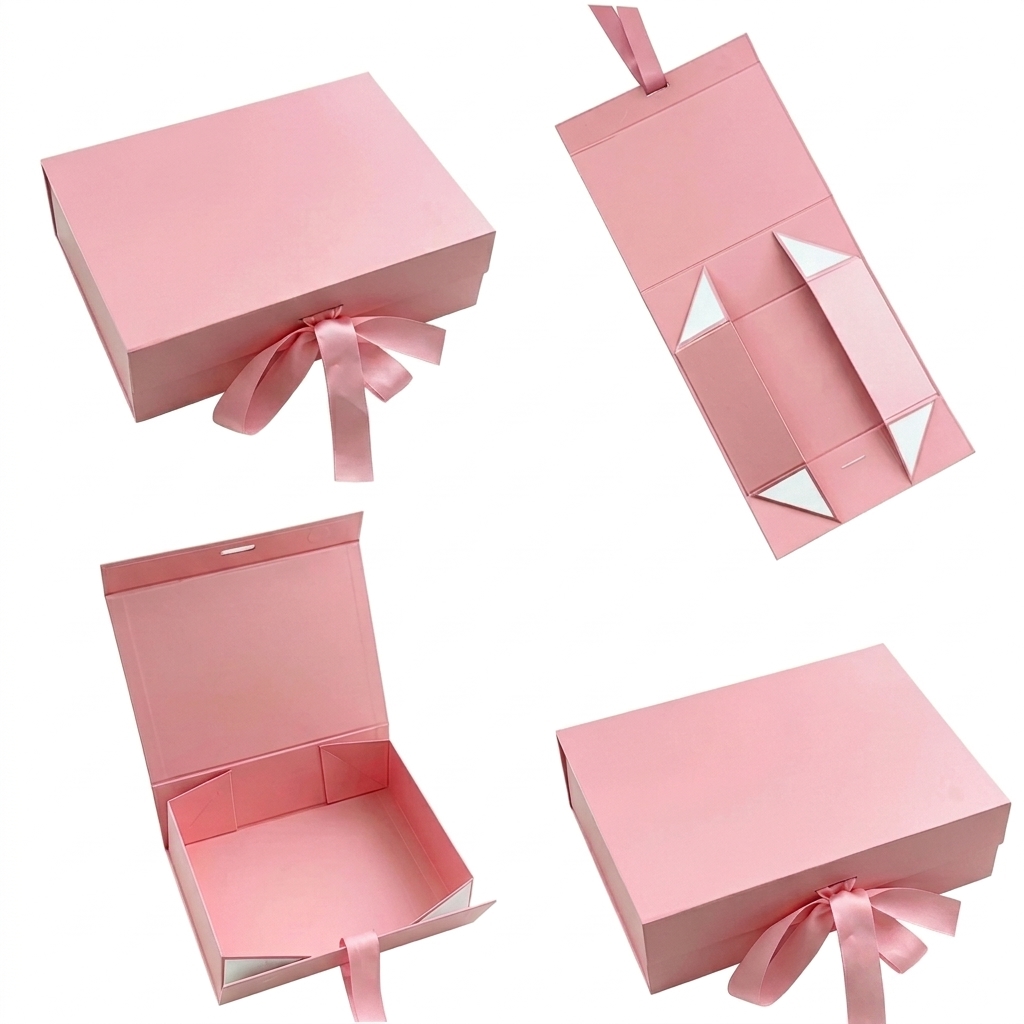
When a retail brand ships hundreds of thousands of units across borders each season, a carton stops being a design object and becomes a logistics instrument. Flat-pack foldable boxes — delivered collapsed, stacked in dense bundles, and locked into final shape at the point of use — solve a problem that fully erected rigid boxes never can: they let a premium unboxing experience travel through a global supply chain without paying the freight penalty of empty air.
For procurement managers and brand owners, the appeal of flat-pack construction is arithmetic before it is aesthetic. Understanding why these structures outperform rigid alternatives at scale is the difference between a packaging program that protects margin and one that quietly erodes it.
What Makes a Box "Flat-Pack" and Foldable?
A flat-pack foldable box leaves the factory flattened and is erected by hand — usually without tools, glue, or specialist training — using engineered crease lines, tuck flaps, and locking tabs. The structure can be built from rigid paperboard wrapped in printed paper, from corrugated board, or from a hybrid of both, and it can carry magnetic closures, ribbon pulls, or drawer mechanisms once it is standing.
The design intent is simple. While empty, the structure should occupy the smallest volume it can. Once filled, it should look and feel exactly like a premium rigid box. Every structure is engineered so the erected box keeps its geometry: corners stay square, lids close flush, and the printed surface survives repeated assembly without cracking along the fold.
The Logistics Case: Empty Air Is the Most Expensive Cargo
The single greatest advantage of flat-pack foldable boxes is volumetric efficiency. Freight is priced by weight or by volume, and for lightweight paper packaging the volume almost always wins. A fully erected rigid box is, functionally, a container of air. Ship the identical box collapsed and you fit dramatically more units into every master carton, every pallet, and every container.
The savings compound downstream:
- Lower ocean and air freight per unit. More boxes per container means less freight cost allocated to each one.
- Cheaper warehousing. Flat-pack bundles consume a fraction of the pallet footprint, so a distribution centre holds far more inventory in the same square footage.
- Faster last-mile handling. Retail and fulfilment teams keep flat bundles beside packing stations and erect boxes on demand.
- Less damage in transit. Collapsed units are far harder to crush, dent, or scuff, which reduces replacement rates.
For a brand moving 200,000 gift boxes in a season, these figures are not marginal. A well-run flat-pack program can reshape the entire landed-cost model, and it does so before a single design feature is considered.
The Engineering Behind a Fold That Lasts
A foldable box only delivers logistics value if it survives the journey and assembles cleanly every time. That depends on material selection and crease engineering — the part of packaging no customer sees but every customer feels.
Four variables decide the outcome:
- Board substrate. Rigid grey board supplies structure and weight; corrugated board offers strength-to-weight efficiency. The right choice depends on load, printing requirements, and the intended shelf life of the packaging.
- Crease precision. Fold lines must be scored deep enough to fold cleanly but not so deep that the printed wrap cracks. Working to a 0.1mm tolerance on automated lines keeps the folds identical across very large runs.
- Printed wrap and lamination. Matte, gloss, soft-touch, and textured wraps behave differently when folded, so the substrate is matched to the fold radius until the surface stays flawless.
- Closure systems. Magnetic closures, hidden magnets, and mechanical locks demand different board calipers to snap shut with a repeatable, satisfying click.
Get these four right and a box can be assembled thousands of times a day in a fulfilment centre without generating a single customer complaint.
Speed and Scale: Matching Production to Retail Calendars
International retail runs on immovable dates — holiday gifting, seasonal launches, trade shows, and promotional windows. Flat-pack foldable boxes fit that rhythm because they are efficient to print, cut, and finish in very large batches.
High-volume programs are supported by a structured lead-time model based on order size, so planners can schedule with confidence:
- Sample lead time: within 3 working days.
- 1,000–10,000 pcs: 12 working days.
- 10,000–50,000 pcs: 12–15 working days.
- More than 50,000 pcs: 15–20 working days.
Every project is customised, so each order is quoted against its own specification and confirmed by sample before mass production begins. Artwork is accepted in AI, PDF, CDR, PSD, and EPS formats, and designers can adjust structure and graphics before tooling is cut.
Consistency Across 120+ Countries
A flat-pack box erected in a boutique in one country must match the box erected in a fulfilment centre on the other side of the world. That demands tighter process control than most buyers expect. Operations run to 99.7% on-time delivery across more than 120 countries, with ISO-certified craftsmen on automated lines, and every stage is documented with photos and video so clients can verify each procedure.
For retailers, that consistency translates into a brand experience that does not vary by region: the same proportions, the same finish, the same fold, every time.
Sustainability and Flat-Pack: A Natural Fit
Flat-pack design is inherently more sustainable because it moves less air. Fewer trucks, fewer containers, and less warehouse energy all lower the carbon footprint attached to each unit. Paired with responsibly sourced and recyclable paper grades, a foldable program can materially reduce a brand's packaging footprint while still looking luxurious.
The Holiday Gift Box range and the Luxury Packaging Box collection both include foldable and magnetic-closure structures suited to seasonal, high-volume retail, while complementary Paper Bags & Accessories keep the whole presentation coordinated.
Where Flat-Pack Wins — and Where It Does Not
Flat-pack foldable boxes are the strongest choice when:
- Order volumes are high and freight efficiency drives the budget.
- Products ship to many markets from centralised inventory.
- Retail or fulfilment staff can assemble boxes on site.
- Seasonal peaks require fast, repeatable production.
They are less suitable when a client needs a permanently bonded, ultra-rigid structure with no assembly step, or when the packaging doubles as a structural display piece. In those cases a flat-pack format is the wrong tool, and alternative constructions are recommended during prototyping so the decision rests on evidence rather than assumption.
Frequently Asked Questions
Are flat-pack foldable boxes as strong as rigid boxes? When properly engineered, yes. A well-designed foldable box locks into a stable, square structure. Prototypes are tested in 3D before production so clients can judge strength and feel directly.
What is the minimum order quantity? Because every project is customised, the minimum is confirmed against the specific structure, material, and finish. Lead times are then quoted by volume band, starting at 12 working days for 1K–10K pcs.
Can the boxes be branded? Yes. Printing, foiling, embossing, and lamination are all part of the finish menu, and artwork is accepted in AI, PDF, CDR, PSD, and EPS formats.
How are quality problems handled? Photos and video are sent at every procedure. If a genuine quality issue occurs, replacement units are produced and shipped.
Designing a Flat-Pack Program Step by Step
A well-run foldable program follows a predictable path, and knowing that path helps buyers ask the right questions at the right moment.
- Define the product envelope. Measure the product, decide the protection level, and choose a flat-pack format — tuck-top, magnetic-closure, drawer, or book-style. 3D prototyping validates fit before any tooling is cut.
- Select substrate and finish. Match board caliper, print method, and surface treatment to both the brand aesthetic and the shipping environment. Recyclable and eco-material grades are available for brands with sustainability targets.
- Approve a physical sample. Sampling is completed within 3 working days, and the sample charge is normally refundable once mass production is confirmed.
- Lock the production schedule. Each order is mapped to its volume band so the promised delivery date is realistic rather than optimistic.
- Run quality control. Photos and video are captured at every procedure, backed by a one-year after-sales commitment.
- Ship and replenish. With 99.7% on-time delivery to more than 120 countries, restocking a fast-selling line becomes routine rather than a crisis.
Because one team handles design, engineering, printing, finishing, and logistics, brands avoid the coordination cost of stitching together several suppliers. That single point of accountability is one of the quieter reasons large retailers return for their seasonal foldable programs.
The Bottom Line
For high-volume international retail, flat-pack foldable boxes turn packaging from a freight liability into a controllable, brand-building asset. They cut transport and storage cost, protect the product in transit, and still deliver the unboxing moment that premium customers remember. Choosing a manufacturing partner who understands both the logistics arithmetic and the material science is what makes the difference — and that is exactly where this factory operates, combining more than 20 years of experience, a 20+ line production floor, and 12 registered patents into one end-to-end service.
If your next retail program needs to move faster, cost less to ship, and look better on the shelf, start by evaluating the flat-pack foldable box.
Table of Contents
- What Makes a Box "Flat-Pack" and Foldable?
- The Logistics Case: Empty Air Is the Most Expensive Cargo
- The Engineering Behind a Fold That Lasts
- Speed and Scale: Matching Production to Retail Calendars
- Consistency Across 120+ Countries
- Sustainability and Flat-Pack: A Natural Fit
- Where Flat-Pack Wins — and Where It Does Not
- Frequently Asked Questions
- Designing a Flat-Pack Program Step by Step
- The Bottom Line

