 EN
EN

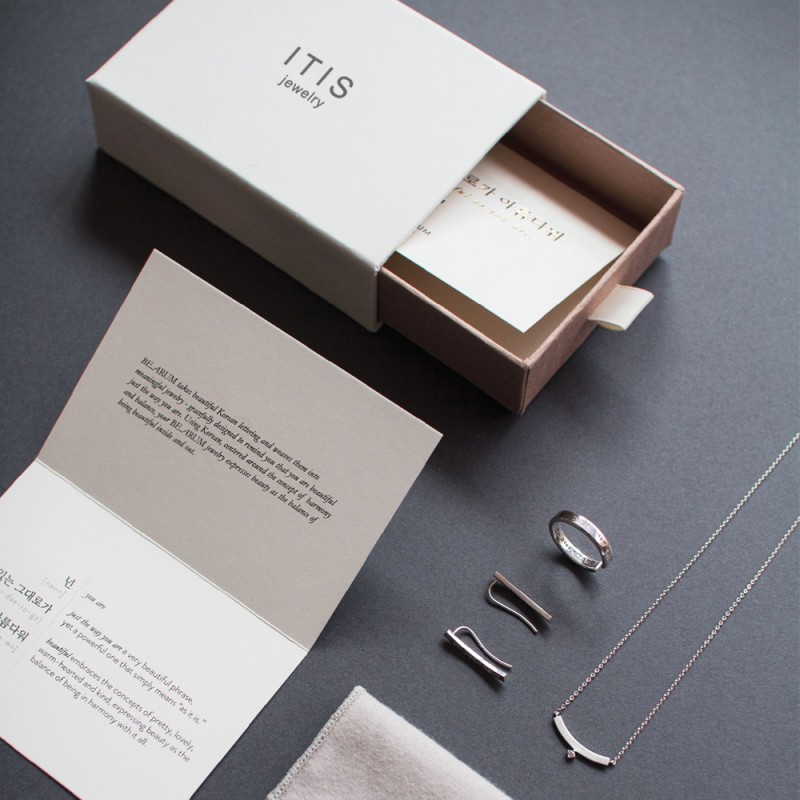
Luxury is defined by details. A misaligned lid, a seam that sits a fraction too high, or a gap wide enough to catch a fingernail can undo months of careful brand building. For premium brands, the line between "expensive" and "exceptional" is measured in fractions of a millimeter. This is exactly why precision manufacturing has become the quiet backbone of the luxury industry.
At ITIS Packaging, we stake our reputation on one deceptively simple promise: hold a 0.1mm tolerance across every fold, cut, and glued edge of a custom box. To understand why that number matters so much, it helps to trace how precision manufacturing shapes the whole life cycle of a luxury good, from the raw material to the moment a customer lifts the lid.
What Does "0.1mm Tolerance" Actually Mean?
A millimeter is small. One-tenth of a millimeter is roughly the thickness of a single sheet of standard office paper. It is a distance the eye cannot measure but the fingertips register instantly. In engineering terms, tolerance is the maximum acceptable deviation from a design specification. When we say we hold a 0.1mm tolerance, we mean a lid designed to be 182.0mm wide never arrives at 182.4mm — and never leaves the line at 181.7mm either.
Sustaining that window is the essence of precision manufacturing. It demands calibrated machinery, disciplined process control, and operators who treat a tenth of a millimeter as a genuine error rather than a rounding detail. A tolerance you can only hit on a good day is not a tolerance at all; it is luck, and luck does not scale.
Why Luxury Goods Live or Die on Tolerances
Picture a magnetic closure box that a jeweler will open in front of a client. If the two magnets are set 0.3mm too deep, the lid will not sit flush; it "floats" and refuses to hold shut. If they are 0.3mm too shallow, the closure snaps with an unrefined clack that signals cheapness. Neither failure is visible on a spec sheet, yet both destroy the impression of quality in a single gesture.
This is the paradox of premium packaging: the more premium the product, the less forgiving the geometry. A mass-market carton can absorb a one-millimeter variance without anyone noticing, but a watch box, a perfume case, or a hand-assembled luxury packaging box is judged by how it feels in the hand. Precision manufacturing is what converts "close enough" into "exactly right," and that conversion is what customers pay for.
Where Tolerance Is Won or Lost
Material and Grayboard Cutting
Every rigid box begins as high-density grayboard. Board that is warped, moisture-swollen, or cut a fraction too short will telegraph its flaws through the wrapped surface. Automated cutting lines remove human variance, but only if the blade, the feed rate, and the board thickness are all tightly controlled. In precision manufacturing, the material stage is where a 0.1mm target is either protected or quietly lost.
Die-Cutting and Creasing
Die-cutting defines the flat shape of the box; creasing defines where it folds. A crease that is too shallow will crack the printed surface when the box is formed, while a crease that is too deep will split the board. Because a crease pushes material rather than removing it, compensating for board thickness at the design stage is essential. Precision manufacturing treats creasing as an engineering calculation, not a guess.
Magnet Placement and Assembly
Magnetic closures live or die on alignment. We use jigs and recessed pockets so the magnet sits at a consistent depth, with the polarity checked on every unit. When pairs are mismatched or the depth drifts, the lid either refuses to close or never holds. Keeping that pair within tolerance is one of the clearest tests of a factory's command of precision manufacturing.
Finishing: Foil, Emboss, and Spot UV
Hot foil stamping, embossing, and spot UV all register against the printed artwork. If the base box is even slightly out of tolerance, the foil lands off-center and the emboss deepens on one side. Because these finishes are applied after forming, they magnify any upstream error. Precision manufacturing keeps the substrate true so decoration lands exactly where the designer intended.
The Hidden Cost of Loose Tolerances
Loose tolerances rarely show up as a single dramatic failure. Instead, they surface as a slow tax on your brand. Assembly lines slow down because lids need coaxing. Retail staff quietly discard units that will not close. Customer reviews mention a box that "felt loose." Returns creep up. Each individual cost is small; together they erode margin and reputation.
There is also the cost of inconsistency. A customer who buys the same product twice and receives two boxes that feel subtly different concludes that the brand has become careless. Precision manufacturing exists to remove that doubt, delivering the same tactile experience whether the unit was produced in January or November, in a run of 500 or 50,000.
Tolerance drift is especially dangerous because it compounds. A board cut slightly oversized pushes the wrap slightly off register, which in turn pushes the magnet slightly out of depth, which finally leaves the lid slightly proud. No single station looks obviously wrong, yet the finished box fails. Precision manufacturing prevents this cascade by treating each operation as dependent on the last and by correcting drift at its source instead of inspecting it away at the end of the line.
How Precision Manufacturing Protects Your Brand
Your packaging is the first physical interaction a customer has with your product. Before they read a word about craftsmanship, they feel the weight, the closure, and the fit. A box that closes with a satisfying, even seal communicates care; a box that rattles communicates the opposite. Brands that invest in precision manufacturing are, in effect, investing in the first three seconds of the customer relationship.
This is also a promise to your retail partners. When a luxury boutique displays your product, every unit must look identical on the shelf. A run with visible variance undermines the very exclusivity the brand is built on. By holding a 0.1mm tolerance, we give brand owners the confidence that unit number 1 and unit number 10,000 will be indistinguishable.
Measuring What Matters: Quality Control
Tolerance without measurement is a slogan. That is why our luxury packaging box lines are built around verification at three checkpoints: incoming material, in-process forming, and final inspection. Gauges, calipers, and automated vision systems compare finished components against the digital master, flagging drift before it becomes a batch problem.
Measurement also closes the loop. When a measurement shows a trend rather than a single outlier, we adjust the machine, the jig, or the material specification. Precision manufacturing is therefore not a static achievement but a continuous discipline — a habit of checking, correcting, and holding the line rather than a certificate on a wall.
Precision Manufacturing and Sustainability
Tight tolerances are also a sustainability strategy, though this is rarely the headline. When components fit the first time, there is less rework, less scrap material, and less energy spent remanufacturing rejects. A box that closes correctly is less likely to be damaged in transit and less likely to be returned. Precision manufacturing reduces waste at the source rather than trying to recycle it at the end.
Material choice amplifies the benefit. By pairing accurate cutting with recyclable and responsibly sourced board, we help brands lower their environmental footprint without compromising the premium feel. The same precision manufacturing that delivers a perfect seam also delivers a tighter nesting layout, which means fewer sheets consumed per order.
Choosing a Partner Who Takes Tolerances Seriously
When you evaluate a packaging supplier, ask one question: what tolerance do you hold, and how do you prove it? A factory that answers vaguely is telling you something. A factory that names a number, shows its gauges, and welcomes an audit is telling you something else. Precision manufacturing is not something a supplier adds on request; it is a culture that either exists on the floor or does not.
You can learn a great deal from a sample. Request a unit, close it twenty times, and examine the seam under raking light. Ask how the sample tolerance will be maintained during mass production — and how that will be verified. Our team is happy to walk you through exactly that, and you can see how we work on our about us page.
The Bottom Line
Luxury goods are bought with the eyes and confirmed with the hands. The 0.1mm that separates a lid that seats perfectly from one that does not is invisible on a drawing, yet it is the entire difference between a product that feels considered and one that feels assembled. Precision manufacturing is how you protect that difference at scale.
If your brand depends on how a package feels when a customer opens it, tolerance is not a technical footnote — it is a brand asset. Hold the line, measure constantly, and let precision manufacturing turn a fraction of a millimeter into a signature of quality that no competitor can copy without doing the same hard work.
Table of Contents
- What Does "0.1mm Tolerance" Actually Mean?
- Why Luxury Goods Live or Die on Tolerances
- Where Tolerance Is Won or Lost
- The Hidden Cost of Loose Tolerances
- How Precision Manufacturing Protects Your Brand
- Measuring What Matters: Quality Control
- Precision Manufacturing and Sustainability
- Choosing a Partner Who Takes Tolerances Seriously
- The Bottom Line

